Tag Archive | Book editing

Write What You Know

I’m sure you’ve heard this before, “write what you know.” Seems simple enough…

So, what do you know? Are you a stay-at-home mom, a business professional, a performer, or a dreamer? Or, maybe you are all of those all rolled into one. What experiences can you draw from to make an interesting story?

Some people may look at their lives and think they’ve not done anything worth writing about, but even “Seinfeld” was a show which claimed to be about nothing at all and yet was probably one of the most entertaining sitcoms ever.

The most wonderful thing about writing is that we can create any adventure we choose. Our characters are our “puppets” that we can manipulate by pulling their strings. Of course, the more I write, the more I find that my characters start telling me what they want to do!  They often disagree with the direction I intended to take them in.

Even so, when we create, we have to know something about what we’re creating. Details are important. Emotions are crucial.

I watched a movie once about a writer, (can’t recall the name of the movie), but he gave some advice that has stuck with me over the years. In teaching an apprentice, he told him that if he intended to “kill off” a character in his story, that it was imperative that the reader feel something when that event takes place. Is the reader happy that the person died, or grief-stricken? If the reader feels nothing, or basically couldn’t care less, then the writer didn’t do his or her job. If you’ve never experienced a loss, then writing an effective story line about it would be very difficult.

This goes back to…write what you know.

No, I have not done everything I write about in my books, but that’s where research and professionals come in. Lots of notes! Still, the best writing you can do, comes from the heart, and the majority of the  emotional experiences in my stories have been personally experienced. Each day that you live your life you have something new to draw from.

Currently, I am the caretaker of my mother-in-law who has Alzheimer’s. In caring for her, I’ve not only discovered the turmoils she’s enduring dealing with the disease, but I’ve also found emotions and moods I didn’t know I possessed. There are good days and bad days, but every day is a learning experience. One day I know that this will appear in my writing in some form or fashion.

Okay…so I feel like I’ve been around the world with this post! I hope I’ve made sense! Blogging is one of my newest learning experiences!

Just when you think you got it…

I can’t recall the first time I heard that you should learn something new every day. Even if it’s something minor. I assume it keeps the brain active and makes day-to-day life much more interesting. I enjoy learning, and also enjoy teaching. There is a time for both.

Writing has become more of a learning process than I ever thought it would be. In school, I excelled at grammar, and was one of those strange students who actually enjoyed dissecting sentences. I also remember most of the words and melodies to those Saturday morning cartoon fillers: “Conjunction, Junction, what’s your function?”  and of course, “Interjections, show excitement and emotion.”  Hallelujah!

Recently, while further exploring deep point of view, I’ve learned that some verbs are not good words when writing single person point of view.  I believe that I mentioned previously that when I first started writing, I was writing in omniscient point of view, which is not as popular as it used to be. I’ve been learning how to change my style to single person point of view, third person. Yes, my head is spinning too!  So, why are those verbs “bad?”

Basically, there is no reason to say, “Joe saw the dog run across the road,” if the chapter I’m writing is in Joe’s point of view. If I have already established that the story is being revealed through Joe’s eyes, then the “Joe saw” could be eliminated. It would be stated simply: “The dog ran across the road.”

I’m amazed at the difference in the flow of my manuscript, once I apply everything I’ve learned. Just when I think I got it exactly the way it should be, I find that it can be even better. This also relates back to my “show don’t tell” previous post. It all ties together.  Instead of writing that your characters; saw, heard, felt, wondered, etc… Show it.

I know that more tricks of the trade will be revealed to me, and I’ll be happy to write what I learn. I’d love for you to share some of your writing revelations to me too! In the end, a story will be told, and hopefully you will be enriched reading it.

The dog ran across the road....

The dog ran across the road….


Show, Don’t Tell

“Show your story, don’t tell it.”

Okay…this one really stumped me. I thought that as a writer I was supposed to tell my story! And then, over and over again at MCRW meetings and retreats, I kept hearing, “Are you showing, or are you telling?”

I think I finally “get it.” Simply put, it’s the difference between writing: “John was angry, and yelled, ‘I hate you.'” AND “John’s hands gripped the rail, tighter and tighter as his knuckles became white. His rapid breathing caused him to spit out the words, ‘I hate you!'”

It’s not some of my best writing, but I wanted to make a simple illustration. I’m sure you can see the difference.

No, I don’t yet consider myself an expert, but I hope that sharing my writing journey with you will help you on your journey too. Don’t get discouraged. You will be your best, worst enemy. Self-doubt can kill your inspiration, so always remind yourself that whatever you put on paper is better than nothing at all. Keep at it, and “show” your stuff!!

Editing…

668846594_CeuPV-L-1

Though I’m writing fiction, being that it is “historical” fiction, it’s very important to know my history. And even if I wasn’t writing historical fiction, and was writing a story involving horses, then I had better well know a lot about horses!  I’ve always heard, “write what you know.”

I confess. When I started writing about the Civil War, I knew very little. Aside from the fact that I knew the North won, and that slavery was an issue in the war. Having grown up in the Northwest, I learned more about Lewis & Clark than I learned about the war. I can’t say that I remember much about them either.  The things we learn in school often times drift out of our memories, unless we have an interest in a particular subject. If you’ve ever watched an episode of “Are you Smarter than a Fifth Grader” then you know what I mean!

So when I started my books involving the war, I decided that talking to an expert was a good idea. Sometimes the information I get on the internet isn’t completely accurate. Hmmm…

I took pages and pages of notes and when I completed the chapters pertinent to those notes, I forwarded them to my expert, holding my breath until I heard back from him. He told me that all but one small detail was accurate. Whew! So, change that one small detail, right?  Sure!  Not so easy. I think I finally understand what so many fellow writers have told me about editing. As a writer, I’m “in love” with my work, and it’s hard to change it. But I’ve found that if I listen to people who know what they’re talking about, I will have a much better product.  So, I toyed with the event, and hope I came up with a good alternative. I’m still waiting to hear back from him on the changes.

I could have just stuck my nose in the air and said, “It’s my book. I know better about what it needs than you do.” But, that wouldn’t have helped my story. I would be destined to have that one Civil war expert read it, (though I’m not sure many of them read women’s fiction), and have him throw the book across the room screaming, “How could she be so stupid?!”

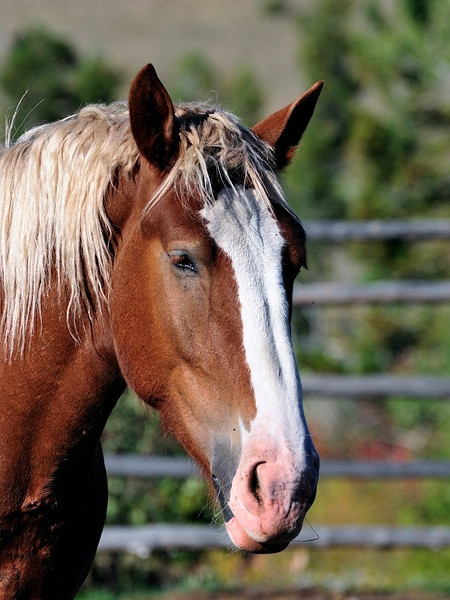
Having experts on board is a plus. My good friend, Diane, is my horse expert. When she read my “horse” chapters, she gave me incredible insight into horse behavior. Her words of wisdom ended up driving my story forward in a way I’d never expected. Thank you, Diane!

Moral of my post: Be willing to edit, even if it hurts!! It will only make your stories better.


Edit, Edit, Edit

Being around other members of MCRW who talk about the endless nights of editing… I want those nights!

Every road leads somewhere...

Every road leads somewhere…

I long to get that phone call, telling me that a publisher finds my work worthy of publication. I want to hear the words, “We love it!  Now…here’s what you need to do to fix it.”

In the meantime, while I’m waiting for that phone call, I’m doing my own line-by-line edits. With everything I’ve learned, I’m taking my books a step further. Every step leads me closer to the bookshelf at your favorite bookstore, or that “e-universe” where you can download it into your e-reader.

Thank you for sharing the journey with me, and be sure to check out my “Books” page and read my prologue for “Marked.”